Wedding-Morning Planning · 10 min read
How to Plan Your Wedding-Morning Hair and Makeup Timeline
Your ceremony time is not the time hair and makeup should finish. Here is how to work backwards, build in breathing room and create a schedule that works in Ireland or at a destination wedding in Italy.
By Evelyn Kennedy · 19 August 2026
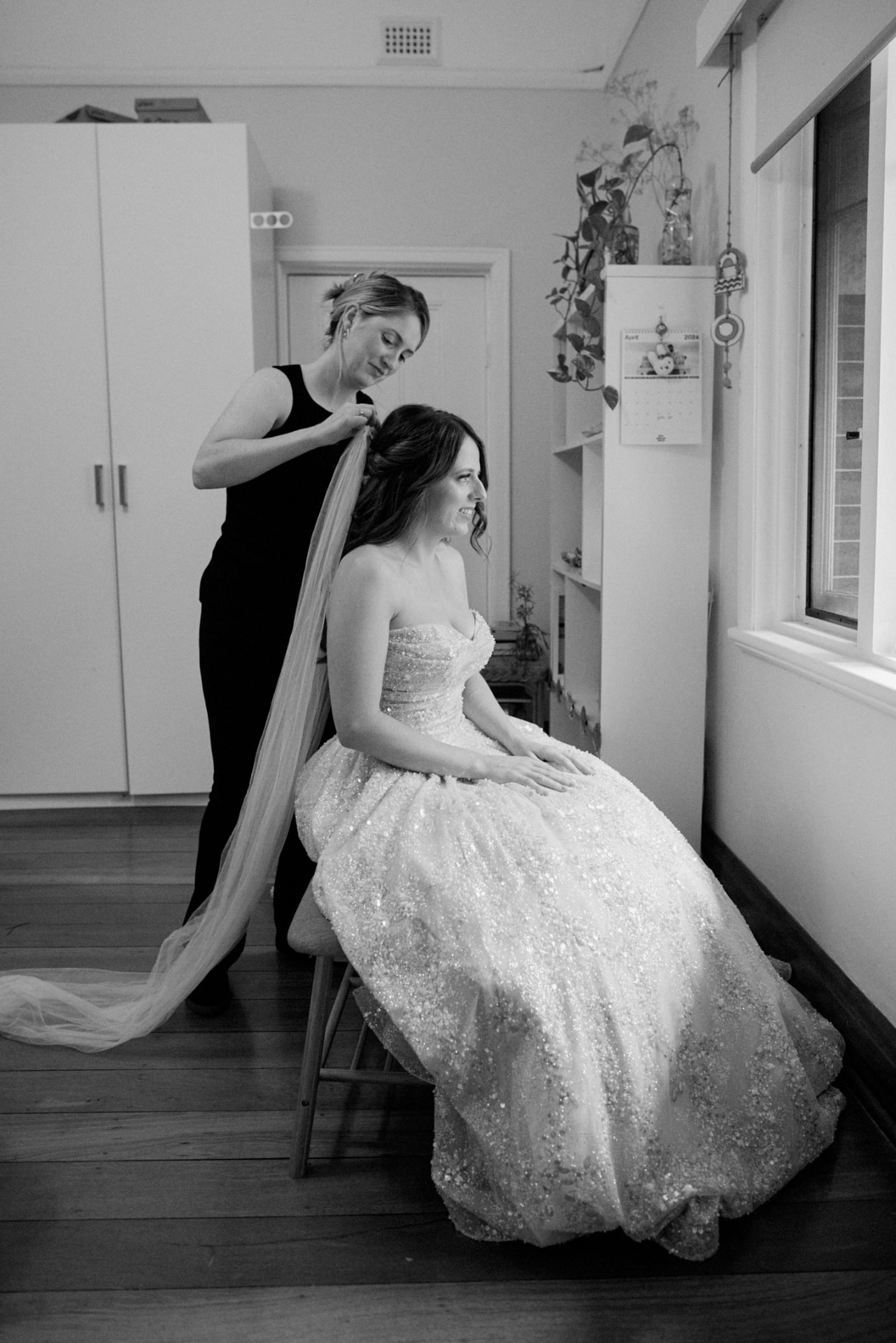
One of the most common wedding-morning mistakes is working backwards from the ceremony time and forgetting everything that needs to happen before you leave.
Hair and makeup should not finish as the car arrives. You still need time to get dressed, place the veil, complete final checks, take photographs and deal with the small delays that happen on real wedding mornings.
A good schedule creates space for those moments. It allows your artists to work properly, keeps the bridal party clear on where they need to be and means you are not watching the clock while someone is applying your lipstick.
Whether you are getting ready at a Wexford venue, elsewhere in Ireland or for a destination wedding in Italy, the same principle applies: begin with the time you need to be completely ready and work backwards from there.
Start with your “ready by” time, not your ceremony time
Your ceremony may begin at 1:00 pm, but that does not mean hair and makeup should finish at 12:45 pm.
First establish:
- What time must you leave the getting-ready location?
- How long will the journey take?
- Does the venue or planner want you ready for photographs beforehand?
- How long will getting dressed realistically take?
- Is your dress simple to step into, or does it have buttons, corsetry or detailed fastenings?
- Are you having a first look?
- Does your photographer want flat-lay and robe photographs before you dress?
Once these are confirmed, choose the time you need hair and makeup fully completed. For many weddings, finishing the bride 60 to 90 minutes before departure gives a much more comfortable margin, but the right buffer depends on the dress, photographs, location and plan for the morning.
Allow realistic time for each service
Rushing does not produce a premium result.
As a general planning guide:
Bride
- Bridal makeup: approximately 60 to 75 minutes
- Bridal hair: approximately 60 to 90 minutes
- Glamorous waves or very detailed styles may take longer
- Final checks, veil placement and refinements: allow 10 to 20 minutes
Bridesmaids, mothers and guests
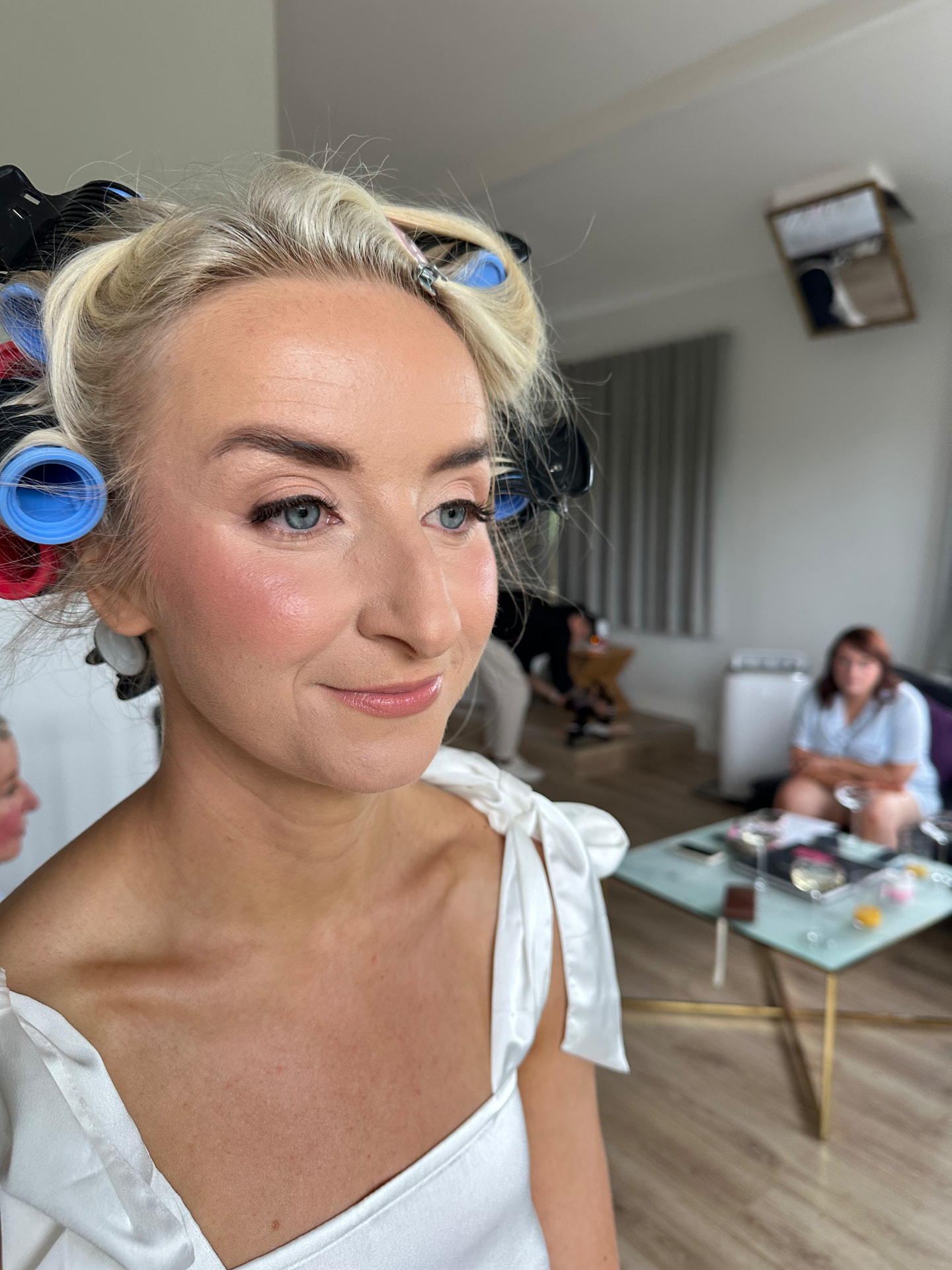
- Makeup: approximately 45 to 60 minutes each
- Hair: approximately 45 to 75 minutes each
These are planning ranges rather than promises. Hair length and density, extensions, the chosen style, skin preparation and individual needs can all affect the timing.
If your entire bridal party is receiving both services, hair and makeup will normally run alongside each other with two artists. If one artist is completing both hair and makeup for a smaller party, the services need to be carefully sequenced without assuming they can overlap.
Decide how many artists you need
More people does not simply mean starting earlier. At a certain point, it is better to staff the morning properly.
Working alone, I can usually complete:
- Up to six makeup applications
- Up to six hairstyles
- Hair and makeup for three people
- Hair and makeup for a fourth person where the ceremony time, styles and location genuinely allow
For larger bookings, an additional trusted artist may be required so everyone can be ready on time without beginning in the middle of the night.
Where possible, I can arrange that artist. Your proposal will include the services required, and their travel costs may also apply.
Do not automatically put the bride last
Many brides assume they should be the final person in both chairs. This can create unnecessary stress if anything earlier in the schedule runs behind.
I usually prefer to finish the bride with enough time for calm final checks. Depending on the number of services, she may be second-last for makeup or placed strategically within the hair schedule.
Someone reliable should be last. Avoid putting a person in the final slot if she is likely to be helping everyone else, caring for a young child, arriving late from another location or regularly disappearing to complete wedding jobs.
The schedule should reflect how the group actually behaves, not only what looks neat on paper.
Give every person an individual time
“Everyone be ready from 8:00” is not a schedule.
Each person should know:
- Their hair time
- Their makeup time
- Which service comes first
- When they should eat and get dressed
- That they need to be available approximately 20 minutes beforehand
Some services finish earlier than expected and others need extra time. If the next person is showering or has left the room, that useful time disappears and the entire schedule can begin to slide.
Send the finished timetable to the bridal party before the wedding and keep a printed or easily accessible copy in the room.
Add setup, pack-down and final-check time
The first appointment should not begin at the exact moment the artist arrives.
Allow time to carry equipment from the car, find the room, set up lighting and products and organise the workspace. Nearby parking makes a real difference when artists are carrying professional kits.
At the end, allow time for:
- Final lip and complexion checks
- Hair refinements
- Veil or accessory placement
- Checking the look once the bride is dressed
- Packing equipment without disrupting photographs
These minutes need to exist in the schedule. They should not be treated as spare time that can automatically absorb another service.
Protect the schedule from common delays
The most frequent delays are usually not caused by the hair or makeup itself.
They include:
- People not being present for their appointment
- Wet hair
- Extensions still tangled or in packaging
- Interruptions for phone calls and questions
- The getting-ready space not being available
- No nearby parking or unclear directions
- Breakfast arriving during a service
- Children needing attention
- Last-minute changes to who is having what
Most of these can be prevented with clear communication, and most of them are decided the evening before the wedding rather than on the morning itself.
Ask everyone to arrive with clean, completely dry hair prepared as advised and clean skin. Have accessories and extensions ready, and give one trusted person responsibility for questions from suppliers so the bride does not have to manage her phone.
Sample timeline: bride plus two guests, hair and makeup
This example assumes one artist is completing six services and the bride needs to be fully ready by approximately 1:00 pm. Exact timings will change according to the looks, ceremony, travel and photography plan.
- 6:45 amArtist arrives and sets up
- 7:00 amGuest 1 hair
- 8:00 amGuest 1 makeup
- 9:00 amBride hair
- 10:15 amGuest 2 makeup
- 11:15 amGuest 2 hair
- 12:15 pmBride makeup
- 1:15 pmBride gets dressed, veil placement and final checks
This order is only an illustration. In practice, the bride's hair and makeup times may be arranged differently, and detailed waves or longer services would require an earlier start or adjusted staffing.
Sample timeline: makeup for the bride plus four guests
This example assumes five makeup applications, one artist and a ready-by time of approximately 1:00 pm.
- 7:15 amArtist arrives and sets up
- 7:30 amGuest 1 makeup
- 8:30 amGuest 2 makeup
- 9:30 amGuest 3 makeup
- 10:30 amBride makeup
- 11:45 amGuest 4 makeup
- 12:45 pmFinal bridal checks
- 1:00 pmBride gets dressed and photographs begin
If a separate hairstylist is involved, both schedules should be built together to prevent one person being expected in two chairs at once.
Planning a wedding morning in Wexford or elsewhere in Ireland
For weddings in Wexford, Waterford, Kilkenny, Carlow, Wicklow or Dublin, travel and access need to be part of the schedule.
Check:
- The exact getting-ready address, not only the ceremony venue
- Parking and access for suppliers
- Hotel room or bridal-suite access time
- Travel time to the ceremony
- Possible delays in busy towns or city-centre locations
- Whether the room has enough natural light, sockets, chairs and table space
If the venue is a significant distance from Wexford or the schedule requires a very early start, accommodation the night before may be the most reliable option.
Travel within 30 km of Adamstown is included in my bridal experiences. Additional travel is clearly quoted in advance.
Planning a destination wedding morning in Italy
An Italian destination wedding may have a later ceremony, but that does not automatically mean the beauty schedule is simple.
Destination mornings can involve:
- A villa with separate rooms or buildings
- Limited vehicle access
- Longer walks with professional equipment
- Warm weather that affects room choice and product setup
- A photographer working around strong midday light
- A first look or portraits before the ceremony
- Several guests sharing one getting-ready space
- Suppliers who have travelled from different locations
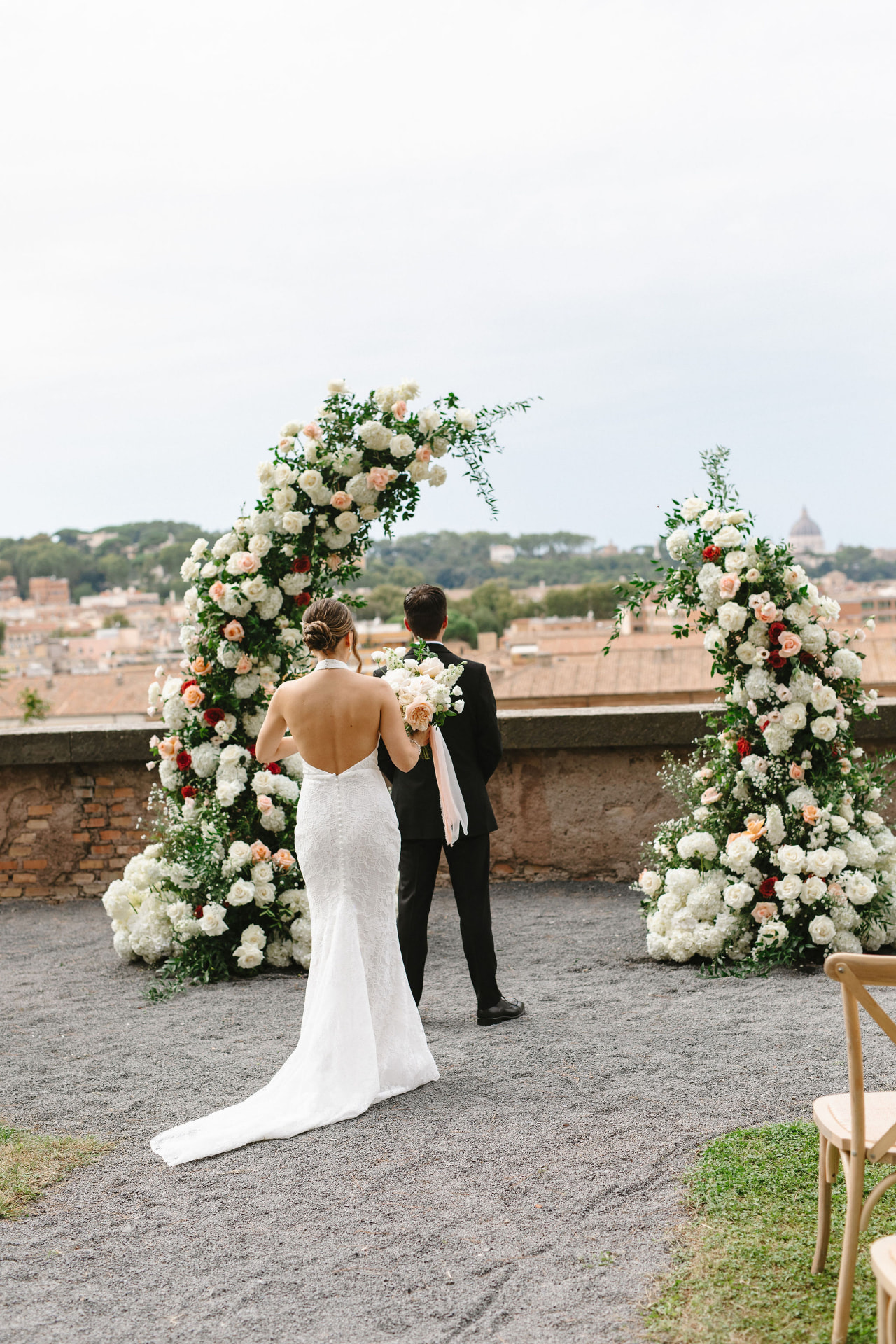
Confirm the exact room and access time with your planner or venue. Air conditioning, natural light, sockets, tables and nearby access are practical details worth checking before the wedding day.
If the ceremony is later, protect the bride's final appointment from the busiest part of the room. A long empty gap between finishing makeup and getting dressed is not always useful, especially in warm weather. The schedule should be built around photography, dressing and departure rather than simply moving every appointment later.
For Italy and other European destination weddings, I create the beauty timeline with the planner, photographer, location and travel arrangements in mind.
Questions to answer before your timeline is finalised
- What time must the bride be completely ready?
- What time is departure?
- Are there first-look or pre-ceremony photographs?
- How many people are receiving hair, makeup or both?
- Are any looks especially detailed?
- Is anyone wearing extensions?
- How many artists are working?
- Can the artists work simultaneously without schedule clashes?
- When can suppliers access the room?
- Is close parking available?
- How long will dressing and veil placement take?
- Who will keep the bridal party on schedule?
The aim is not an early start. It is the right start.
No bride wants to begin unnecessarily early, but compressing six hours of work into four creates a much bigger problem.
A realistic beauty schedule lets the morning breathe. It gives your artists time to do their best work and gives you space to enjoy the people around you.
That calm does not happen by accident. It is planned.